Transport of MOX fuel from Europe to Japan

Ship transporting MOX fuel: the Pacific Heron

The first transport of MOX fuel from Europe to Japan initiated in 1999 the process of recycled nuclear fuel return from Europe to Japan. It complements the transport of spent nuclear fuel from Japan to Europe (over 170 shipments) and the vitrified residues return from France to Japan (12 vitrified residue shipments). Similar MOX fuel transports will be performed in the years to come on a regular basis.

Background

In February 1997, the Japanese government stated that, in accordance with the country's long-term nuclear energy commitment, it was necessary for Japan to start utilising MOX fuel in its commercial nuclear reactors as soon as possible. Later that month, the Japanese electric power companies unveiled their plans to utilise MOX fuel in 16 to 18 reactors.

MOX fuel is manufactured in Europe with plutonium recovered at British and French reprocessing facilities under long-standing commercial contracts between the Nuclear Decommissioning Authority (NDA), AREVA (France) and Japanese electric power companies. The NDA and AREVA have an extensive track record in safely manufacturing, and transporting MOX fuel to various utilities in Europe.

Basic Schedule

  • • MOX fuel is fabricated in dedicated facilities in Europe owned by AREVA or NDA.
  • The MOX fuel assemblies to be used in Japanese nuclear power plants are then loaded into special transport casks.
  • The sea transport of the casks from Europe to Japan takes place on dedicated ships, owned and operated by PNTL, which are specially built for transporting nuclear materials.
  • On arrival in the Japanese ports, the casks are transported by road to the reactor sites where the MOX assemblies are loaded in the reactor cores.

Technical aspects

MOX fuel is a conventional nuclear fuel made up of a mixture of uranium and plutonium. The plutonium content varies between 5 and 10% depending on the design of the fuel. MOX fuel has been used in various countries worldwide for more than three decades. 35 reactors are loaded with MOX fuel in Europe.

MOX manufacturing also is a well-established process. MOX fabrication plants have been in operation in Europe for more than 40 years. The utilisation record of MOX fuel in terms of safety, performance, and manufacturing is excellent.

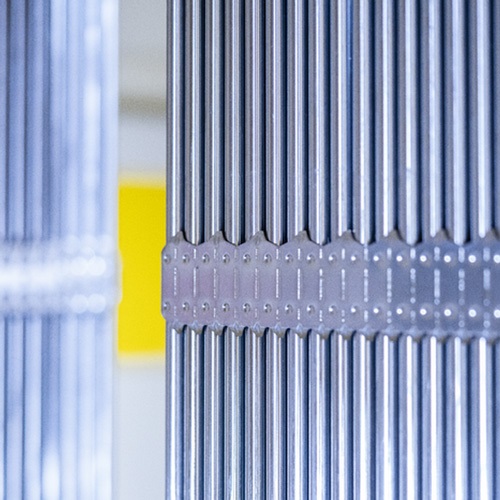
Uranium and plutonium powders are mixed and homogenized. The blend is then pressed and sintered at high temperature. The ceramic, stone-like MOX fuel pellets are inserted into corrosion resistant fuel rods. The rods are assembled together in metallic structures to form MOX fuel assemblies.

The MOX fuel assemblies are transported in a specific cask, licensed by British, French and Japanese Authorities. Each cask, designed to ensure the safety of the transport, weighs around 100 tonnes, is more than 6 m long and 2 m in diameter. It is similar to casks used for spent fuel and vitrified residues transports. The ships are specially designed and are only used for the transport of nuclear materials. Their length is in the range of one hundred metres.

The casks and ships used, as well as the organization of the transport meet the latest requirements of the applicable international and national regulations, including those related to safety (International Atomic Energy Agency recommendations, and International Maritime Organization regulations).

Physical protection

Because of its nature (it contains significant amount of fissile materials), MOX fuel is classified in the category requiring stringent measures. Extensive physical protection measures are incorporated in the transportation plan for shipping MOX fuel from Europe to Japan to ensure that the ships and their cargo are protected against threats of theft or sabotage.

Two ships, sailing together, are used to transport MOX fuel from Europe to Japan. The ships are also armed and are protected by a specially trained force, the British Civil Nuclear Constabulary (CNC).

For instance, some measures that are part of the protection system:

- careful selection of the route to be used.

- no scheduled port call en route.

- use of armed escorts aboard the transport ship that are independent of the crew.

- use of multiple and secure communications system.

- monitoring of the transport ship location and cargo status by an operation centre.

All these physical protection measures meet or exceed the guidelines set forth by the International Atomic Energy Agency for fissile material transports and the requirements of the 1988 U.S.-Japan Agreement for Co-operation Concerning Peaceful Uses of Nuclear Energy.

The physical protection system put in place for each transport of MOX fuel from Europe to Japan is carefully reviewed by the U.S. government, including experts from the defense, foreign affairs, naval, and intelligence communities. The U.S. government officially reviews and confirms that the physical protection measures are adequate and notifies Japanese Authorities of this decision.

Display the detail

Why is MOX fuel transported from Europe and Japan?

Shibuya district in Tokyo

Japan has large energy needs and scarce natural resources. Japan is therefore engaged in a comprehensive long-term program for the development of its nuclear energy industry, producing secure supplies of electricity.

This strategy includes a complete closed fuel cycle with the final stage being the construction of the domestic light water reactor reprocessing plant and the commercial introduction of fast breeder reactors in the future.

Before the domestic reprocessing plant being operational, Japanese Utility companies contracted with AREVA in France and NDA in the United Kingdom for overseas reprocessing services in order to manage such reprocessing programme. Germany, Switzerland, Belgium, the Netherlands and Italy have signed the similar contracts. Under these contracts, spent fuel has been safely transported from Japan to Europe until 2001, then reprocessed by AREVA and NDA. Part of the recovered plutonium has been returned to Japan and used as FBR fuel. Main part has remained in Europe and will be fabricated into MOX fuel for light water reactors usage in Japan.

MOX fuel is transported from Europe to Japan with the full approval of British, French, and Japanese Authorities. The USA have approved the transfer of MOX fuel from Europe to Japan according to the US-Japan and US-EURATOM Agreements for Co-operation concerning Peaceful Uses of Nuclear Energy. As part of the USA co-operation and assistance, the USA Executive Branches review the transportation plan and its adequacy to the physical protection criteria, prior to each shipment.

Dedicated casks and ships are used for the transport of MOX fuel from Europe to Japan.

Japanese reactors set to receive MOX fuel in the near future

Nuclear power plants in Takahama, Fukushima Daiichi and Kashiwazaki Kariwa

Takahama (Kansai Electric), Fukushima Daiichi (Tokyo Electric) and Kashiwazaki Kariwa (Tokyo Electric) nuclear power plants

Display the detail

What is MOX fuel?

MOX fuel rods

MOX fuel is a conventional nuclear fuel used in standard commercial nuclear reactors in major European nuclear-using countries.

The only difference with the basic nuclear fuel, made only of uranium and known as UO2 fuel, is that MOX fuel contains a small proportion of plutonium mixed with a higher proportion of uranium (MOX stands for Mixed uranium and plutonium OXides). The plutonium ratio varies according to the design of MOX fuel: Typically, the plutonium content ranges from 5% to 10%.

Plutonium is naturally produced from uranium irradiation in the reactor core. After three to four years, the spent UO2 fuel contains about 1% of plutonium. Plutonium is recovered during the reprocessing operation and separated from the other elements contained in the spent fuel (uranium and ultimate waste).

Plutonium is a common chemical element. Its fissionable characteristic makes it a prime choice for heat and energy production. The fissionable feature of plutonium makes it possible to use it as a reliable source of energy given that the proper technological structures are put in place: one pellet of MOX has the same energy output as one tonne of coal.

MOX is the second most common fuel for commercial nuclear power plants, just after uranium fuel. The first MOX fuel elements were manufactured in the late 1950s. Countries such as France, Germany, and Switzerland have been using MOX fuel in commercial nuclear power plants for many years. 35 commercial nuclear power reactors are currently loaded with MOX fuel in Europe: 20 in France, 10 in Germany, 3 in Switzerland, and 2 in Belgium. Up to 70 reactors world-wide are scheduled to be using this fuel by 2010 including Japan, Russia and the United States. The operational and safety record of MOX use and manufacturing is excellent and comparable to UO2 fuel.

MOX fuel is manufactured in specialised fabrication plants located and operated in Europe.

NDA and AREVA NC use quite similar industrial processes to manufacture MOX fuel. The process in use at NDA's facility is known as SBR (Short Binderless Route). The process in use at AREVA NC 's plants is known as MIMAS/A-MIMAS (MIcronized MASter mix/Advanced-MIcronized MASter mix).

In the MOX fuel fabrication process, several industrial steps are required to obtain the desired product. The first phase, which parallels the fabrication of ceramics, consist in mixing and homogenizing the plutonium oxide and uranium oxide powders to the desired level of plutonium content. The obtained powder is pressed to cylindrical form pellets. The pellets are then sintered in furnaces at around 1,500°C. This gives the pellets a hardened, stone-like, highly resistant and highly stable composition.

The next steps are very similar to these in use for the manufacturing of UO2 fuels. The pellets are then ground and inserted into empty rods made of zirconium alloy. The rods are tightly welded. The rods are assembled together to form MOX fuel assemblies. The MOX fuel assemblies are then stored prior to their shipment to the nuclear power plant.

Numerous and continuous controls are performed, through remote and human means, at each step of the MOX manufacturing process according to stringent quality assurance programmes certified by MOX customers. Around 1,800 MOX fuel assemblies have been manufactured, mainly in Europe.

- Technical complement (http://www.AREVA-nc.fr/scripts/AREVA-nc/publigen/content/templates/show.asp?P=6994&L=EN&IMP=O)

Reactor cores loaded with MOX fuel

Reactor cores loaded with MOX fuel as of June 2000

Where MOX will be used in the near future

Where MOX will be used in the near future

Display the detail

How is MOX fuel used in a reactor?

MOX fuel, a conventional nuclear fuel mixing uranium and plutonium, does not differ from uranium-only nuclear fuel (UO2 fuel) when used in a reactor. MOX fuel is comparable to UO2 fuel in terms of performance, operational use, safety, and environmental impact. No or only minor modifications are required to load a commercial nuclear reactor with MOX fuel.

In fact, burning plutonium in commercial nuclear reactors is a well-known and well-assessed process. For instance, in a reactor with a 100% UO2 fuel core, more than 30% of the fission process producing electricity comes from the plutonium created in-situ.

MOX fuel has been safely generating electricity in commercial reactors over the world since the 1960s without a single incident. Numerous countries have loaded nuclear reactors with MOX fuel. Overall, around 1,800 MOX fuel assemblies have been loaded into nuclear reactors.

Today, 35 European reactors are loaded with MOX fuel. More should be loaded in the years to come. France is the biggest MOX user in the world with 20 reactors loaded with a limited in-core MOX ratio of 30%. A French reactor was first loaded with MOX fuel in 1987. The French MOX experience, based on several hundred MOX assemblies, shows that there is no operational differences between UO2 and MOX fuels regarding fuel performance and safety. Loading MOX fuel into French reactors has only needed minor and easy-to-made adaptations.

Safe and efficient use of MOX fuel in Japanese commercial reactors was successfully demonstrated by two testing campaigns performed in the late 1980s. The Tsuruga 1 unit was loaded with 2 MOX fuel assemblies between 1986 and 1990, and the Mihama 1 unit was loaded with 4 MOX fuel assemblies between 1988 and 1991. Like France, Japan will load its commercial nuclear reactors with a in-core MOX ratio of around 30%.

Research and development programmes are underway in Europe and Japan to increase the percentage of MOX fuel assemblies to be loaded in a reactor. For instance, French and German companies are jointly working on the EPR project (European Pressurised Reactor). This reactor, whose commissioning is planned for the first decade of the 21st century, is basically designed to operate with 50% MOX core loading and 100% MOX core loading is considered. Japan is also working on a new generation reactor known as the Advanced Boiling Water Reactor (ABWR) that will use a full MOX fuel core.

Reactor cores loaded with MOX fuel as of June 2000
Where MOX will be used in the near future.

Reactors loaded with MOX fuel (REL) as at June 1, 2000, Reactors loaded with MOX fuel, current and future situation.

Display the detail

Does MOX fuel present risks with regard to proliferation?

MOX fuel rods

The use of MOX fuel in commercial reactors provides coherent responses to the issue of non-proliferation.

Reduction in plutonium inventory

In electricity generating mode, any nuclear reactor using uranium fuel (UO2 fuel) naturally produces plutonium. Any reactor loaded with MOX fuel however consumes plutonium. The plutonium, recycled in the form of MOX fuel, fulfills the same role as the uranium in UO2 fuel. In UO2 fuel, part of the uranium is consumed just as part of the plutonium is in MOX fuel. A nuclear reactor using uranium fuel for example, produces 250kg of plutonium per annum. A reactor loaded with 30% MOX fuel however, does not produce any. In the future, with the introduction of reactors loaded with 50% to 100% MOX fuel, a greater quantity of plutonium will be consumed than that produced.*

Breaking down plutonium's isotopic composition

A distinction has been established by the international nuclear community between two types of plutonium: reactor quality plutonium and military quality plutonium. The first type is used solely within the commercial nuclear fuel cycle while the second is used solely for military purposes.

The difference between these two types of plutonium lies in their composition.

Military quality plutonium: this plutonium has a high - typically 90% or more - isotope 239 content, recognized as being the most suitable for the production of nuclear weapons.

Reactor quality plutonium: unlike military quality plutonium, this plutonium has a much lower isotope 239 content and a much higher proportion of isotopes 240 and 242 which are non-fissile. These isotope pairs in plutonium have properties that complicate design and handling by negatively impacting on the performance of nuclear weapons.

During the nuclear reaction within the reactor, the plutonium undergoes a natural deterioration of its isotopic composition. The longer the plutonium remains in the reactor, the more of the plutonium's non-fissile isotopes (plutonium 240 and 242) are produced. In European countries, MOX fuel remains in the reactor for three to four years. Japan provides for the same management system for its MOX-fueled reactors.

MOX fuel is safer than enriched uranium combustion in terms of proliferation

Safety guarantees and protection of nuclear materials

In addition, the fuel cycle industry provides all safety guarantees and measures for the protection of nuclear materials. Plutonium, before its actual conversion into MOX fuel, is stored in secure and protected buildings. These buildings are under constant surveillance by site managers, under the strict supervision of the national and international authorities. Following the example of all facilities associated with the commercial nuclear power industry, MOX fuel production plants in Belgium, France and the United Kingdom are controlled by the relevant national and international authorities, and the IAEA and Euratom in particular. The use of MOX fuel in reactors and its transportation follow the same logic.

* 88% capacity factor based on an average core base load for a 900 MWe reactor

Display the detail

How MOX fuel is transported to Japan?

Dedicated casks

Transport cask for spent fuel

Casks are designed to protect people and the environment from radiation risks during the transportation of nuclear materials. If an accident occurs, packages must ensure the safe confinement of the contents and the protection of the public and operators.

MOX fuel is transported in specific casks such as TN 12/2 for the maritime shipment. These casks have been fully licensed for the transport of MOX fuel by the competent Authorities in France, Japan, and the UK, according to the materials transported. They comply with very stringent Type B tests imposed by the International Atomic Energy Agency (IAEA).

The preliminary operations before maritime shipment consist in transporting the MOX fuel into these dedicated casks from the MOX fabrication plants to the respective departure ports. Adequate land transport systems and facilities used for these transfers and dedicated gantry cranes used for the loading onto the ship ensure a very high reliability and operation safety level. Once the ship is loaded with the casks, the voyage to Japan really begins.

For nearly 40 years, used nuclear fuel have been shipped from Japan to Europe using such types of casks without any incident involving the release of radioactivity until its completion in 2001.

TN is a trademark for TN International, world leader in packaging for nuclear materials.


Diagram showing a TN 12/2 transport cask

Outline of TNTM 12/2:

Name of package: TN 12/298

Weight of empty transport cask: 98 tonnes

Total weight (with payload): 110 tonnes

Dimensions: ø 2.5 m x 6.150 m

Maximum payload: 12 BWR or 8 PWR MOX fuel assemblies

Thermal output: 3.6 kW/cask

Main materials of transport cask:

- Body   - Carbon steel, resin, wood, etc

- Lid      - Stainless steel, resin, etc.

- Basket   - Aluminium alloy, stainless steel

- Bottom shock absorbing cover   - Stainless steel, wood, etc..                                                  .

Dedicated ships for maritime transport

PNTL ships are used to transport MOX fuel assemblies to Japan. PNTL is owned by INS (62.5%), Japanese utilities (25%) and AREVA through its subsidiary TN International (12.5%).

PNTL uses dedicated vessels, which have regularly transported spent fuel from Japan to France and the United Kingdom. Since 1995, PNTL vessels have routinely shipped vitrified residues from Europe to Japan as well as MOX fuels. These ships are over 100 metres long and more than 16 metres wide and each ship carries sufficient amounts of diesel fuel to complete a journey, without any port-call. They meet the international standards and requirements of the International Maritime Organization (IMO), and comply with the requirements of the Japanese Ministry of Land, Infrastructure, Transport and Tourism (MLIT) as well as the British and French competent Authorities.

PNTL ships are used to transport MOX fuel assemblies to Japan. PNTL is owned by INS (62.5%), Japanese utilities (25%) and AREVA through its subsidiary TN International (12.5%).PNTL uses dedicated vessels, which have regularly transported spent fuel from Japan to France and the United Kingdom. Since 1995, PNTL vessels have routinely shipped vitrified residues from Europe to Japan as well as MOX fuels. These ships are over 100 metres long and more than 16 metres wide and each ship carries sufficient amounts of diesel fuel to complete a journey, without any port-call. They meet the international standards and requirements of the International Maritime Organization (IMO), and comply with the requirements of the Japanese Ministry of Land, Infrastructure, Transport and Tourism (MLIT) as well as the British and French competent Authorities.

PNTL ships, with more than 5 million miles covered without a single incident resulting in the release of radioactivity, have a safety record second to none. With almost 40 years experience, PNTL has transported more than 2,000 casks in over 170 shipments.

Two ships, sailing together for mutual support and protection, are used to transport MOX fuel from Europe to Japan. This system is part of the physical protection measures required by the 1988 US-Japan Agreement for Co-operation Concerning Peaceful Uses of Nuclear Energy. The ships are also armed with guns and are protected by a specially trained force from the British Civil Nuclear Constabulary (CNC). All these measures meet or exceed the International Atomic Energy Agency requirements.

Diagram of sea transportation of MOX fuel to Japan

Technical description of the INF 3 PNTL vessel “Pacific Heron”:

 Type  of vessel: Pacific class vessel

Main dimensions: length : 104 meters*,  width : 17 meters*

Deadweight tonnage:  4,500 tonnes

Displacement tonnage:  9,500 tonnes

Main engine: Diesel engine 2,500 kW. x 2

*(Approx.)

MOX fuel canisters, transported by ship to Japan
Display the detail

What are the physical protection measures?

Drop test on a MOX fuel transport canister

In compliance with International regulations and agreements

The potential risk of possible use of nuclear material for non-peaceful purposes underlines the need for its special protection. Effective systems are therefore required to protect nuclear material and facilities from theft, sabotage or unauthorised removal. The responsibility clearly rests with governments for ensuring that such systems are properly established and operated.

The international competent Authorities controlling these issues are the International Atomic Energy Agency (IAEA) and its Member States and in the European Union, EURATOM.

IAEA is fully dedicated to guarantee the safe, secure and peaceful use of the nuclear technologies in the world whereas EURATOM has developed a complete European legislation in terms of nuclear security.

The physical protection regulations distinguish three different categories of nuclear materials associated with specific measures from the most stringent ones to the less demanding.

Because of its nuclear characteristics (it contains significant amount of fissile materials), MOX fuel is classified in the category requiring stringent measures. Extensive physical measures are incorporated in the transportation plan for shipping MOX fuel from Europe to Japan to ensure that the ships and their cargo are protected against threats, theft or sabotage.

The elaborated measures to be taken to defend the PNTL ships and their cargo of MOX fuel against potential threats meet or exceed the standards provided for in:

- the Convention on the Physical Protection of Nuclear Material (International Atomic Energy Agency - IAEA - publication INFCIRC 274),

- the Recommendations on the Physical Protection of Nuclear Material published by the IAEA (INFCIRC 225),

- the 1988 US-Japan Agreement for Co-operation Concerning Peaceful Uses of Nuclear Energy. That agreement elaborates in detail extensive physical protection measures to be employed for the transportation of plutonium oxide or MOX fuel by sea.

Following are excerpts of letters sent by the USA government to several high-ranking members of the USA Congress and House of Representatives and to the Japanese government stating the adequacy of the physical protection measures to be employed for the transport of MOX from Europe to Japan

: “As required by the Agreement, Japan has prepared a transportation plan for the upcoming MOX shipment in close consultation with the United States. [...] USA experts have carefully scrutinised successive drafts of the plan over a period of  several years. [...] In addition the responsible USA Executive Branch agencies have formally reviewed the final plan. They have concluded that it fully satisfies all requirements of the 1988 US-Japan Agreement, including the requirements of adequate physical protection”.

“It is the judgement of USA experts that the final transportation plan fully satisfies the provision of Annex 5 of the Implementing Agreement and thus constitutes a sound basis for the Government of Japan to undertake its responsibilities pursuant to the Agreement for Co-operation in connection with the planned initial retransfer of MOX fuel from Europe to Japan”.

Physical protection measures for maritime shipments

The security measures for MOX shipments fully satisfy the requirements of the US-Japan Agreement as detailed: - use of a dedicated transport ship.

- careful selection of the route to be used.

- no scheduled port call en route.

- use of armed escorts aboard the transport ship that are independent of the crew.

- an armed escort vessel to accompany the transport ship from departure to arrival.

- measures to impede the removal of the cargo at sea.

- use of multiple and secure communications system.

- monitoring of the transport ship location and cargo status by an operation centre.

- preparation of a contingency plan.

To satisfy these requirements, the proposed physical protection system for the MOX transport includes two armed escort vessels, as part of a comprehensive physical protection system. The ships sail together each providing an armed escort service for the other. The ships have a broad range of protection systems to deal with any potential threats including naval guns.

Specially trained and armed officers of the British Civil Nuclear Constabulary (CNC) protect both ships. The CNC has extensive experience in protecting nuclear materials and nuclear facilities in the UK and has received special training for the shipments.

The choice of the route also includes consideration of all issues relating to physical protection. For instance, the ship avoids areas of civil disorder.

Prior to each shipment, a transportation plan is prepared documenting the specific arrangements to be implemented for the shipment to assure, among other things, adequate physical protection of the MOX fuel elements to be transported. The plan is established through co-ordination among the industry parties concerned and the governments of Japan, the UK, France and the USA.

Display the detail

What is the regulatory framework for the transport of MOX?

International regulatory framework

All the countries (France, Japan and the United Kingdom) involved in the production, use and transportation of this MOX fuel abide with the international regulatory framework guaranteeing the peaceful use of nuclear materials. The main constituting elements of this framework are:

The Treaty of Non-proliferation of Nuclear Weapons (NPT)

In adhering to the NPT, non-nuclear weapons states (NNWS) pledge not to acquire nuclear weapons in exchange for a pledge by the nuclear weapons states not to assist the development of nuclear weapons in any NNWS. The NPT entered into force in March 1970. In 2007, there were 190 parties to the NPT, including France, Japan and the UK.

The Convention on the Physical Protection of Nuclear Material

The Convention sets levels of physical Protection to be applied in international transport of nuclear materials. It outlines security requirements for the protection of nuclear materials against the intentional commission of malevolent acts relating to the transboundary carriage of nuclear materials and provides for the prosecution and punishment of such offences. The Convention entered into force in February 1987 and has been amended on July 8, 2005 by 89 countries, involving fundamental changes that substantially strengthen it.

The basic guidelines for physical protection systems have been developed by the IAEA (INFCIRC/225/Rev. 4, Recommendations for the Physical Protection of Nuclear Material). First published in 1972, the guidelines have been revised several times since then. They cover physical protection for nuclear material in use, storage, and transport, both domestically and internationally. They have proven to be of significant importance in the development of international agreements and national requirements. For nuclear material in international transport, the responsibility for implementing effective physical protection systems rests with the shipping and receiving States.

INFCIRC/225/Rev.4 sets an objective for States to establish conditions which would minimise the possibilities for unauthorised removal of nuclear material or for sabotage and requires that appropriate measures, consistent with national requirements, should be taken to protect the confidentiality of information relating to transport operations, including detailed information on the schedule and route.

The Convention on the Physical Protection of Nuclear Material (INFCIRC/274/rev.2) also requires States Parties to implement specific protection measures for nuclear material in the course of international carriage and establishes a framework for international co-operation in the field of physical protection.

The PNTL vessels, being United Kingdom flagged, meet the requirements of the UK Nuclear Industry Security Regulations 2003. These regulations incorporate into UK law the UK's obligations under INFCIRC/225/Rev4 and the Convention. Regulatory responsibility for security of the transport operations rests with the UK Government's Office of Civil Nuclear Security. The whole transportation system thereby ensures the appropriate measures are in place to counter the threat of theft, sabotage or other unlawful removal of the nuclear material.

US-Japan / US-EURATOM Agreements

In the frame of the agreements of cooperation for Peaceful Uses of Nuclear Energy between US and Japan as well as between US and EURATOM, the USA through the US Atomic Energy Act have endorsed the retransfer to Japan of plutonium that had been previously separated in Europe (under the form of plutonium powder or product such as MOX fuel manufactured with this plutonium) so long as the transfer takes place under conditions designed to ensure adequate protection against theft or diversion during transit.

In addition, a fundamental principle of Japan’s recycling programme is that Japan will not possess separated plutonium stocks under its national control beyond the amount required to implement its energy programme. This policy is known as the “no surplus plutonium” principle.

INF Codes

These MOX transports between Europe and Japan will be carried out within the prescriptions of the INF 3 class.

Background

In 1965, the International Maritime Organization (IMO) issued the IMDG code (International Maritime Dangerous Goods) ruling the transport of dangerous goods by sea.

In 1993 and in addition to already existing IAEA regulations, IMO proposed an international regulation with more particular constraints for vessels carrying the most sensitive radioactive material.

In 1999, the INF code is the international code for the safe carriage of packaged Irradiated Nuclear Fuel, plutonium, and high-level radioactive waste on board ships. It was adopted and became mandatory in 2001, defining three classes of ships, depending on the total radioactivity of cargo which is carried on board, and regulations vary according to the Class:

1: Class INF 1 ship - Ships which are certified to carry INF cargo with an aggregate activity less than 4 x 10³ TBq (TeraBecquerel = measurement of radioactivity).

2: Class INF 2 ship - Ships which are certified to carry irradiated nuclear fuel or high-level radioactive wastes with an aggregate activity less than 2 x 10⁶ TBq and ships which are certified to carry plutonium with an aggregate activity less than 2 x 10⁵ TBq.

3: Class INF 3 ship - Ships which are certified to carry irradiated nuclear fuel or high-level radioactive wastes and ships which are certified to carry plutonium with no restriction of the maximum aggregate activity of the materials.

ISPS

The International Ship and Port Facility Security (ISPS) Code is an amendment to the Safety Of Life At Sea (SOLAS) Convention (1974/1988) on minimum security arrangements for ships, ports and government agencies. Having come into force in 2004, it prescribes responsibilities to governments, shipping companies, shipboard personnel, and port/facility personnel to "detect security threats and take preventative measures against security incidents affecting ships or port facilities used in international trade."

The main objectives of the ISPS Code are:

- to detect security threats and implement security measures

- to establish roles and responsibilities concerning maritime security for governments, local administrations, ship and port industries at the national and international level

- to collate and promulgate security-related information

- to provide a methodology for security assessments so as to have in place plans and procedures to react to changing security levels.

Regulations for multimodal transportation

Dangerous goods transportation is regulated by various rules depending on the modes of transport (road, rail and sea) and the countries involved.

In Europe, the current regulations for land transport are based on the following European Union Directives:

  • The order relative to the carriage of dangerous goods by road based on the European Agreement concerning the international carriage of Dangerous goods by Road (or ADR),
  • The order relative to the carriage of dangerous goods by rail based on the international regulations concerning the carriage of dangerous goods by rail (or RID).

Sea transportation complies with the rules of the IMDG Code, adopted by the IMO. This code offers guidance to persons involved in the handling and transport of radioactive materials in ports and on ships. It describes all of the provisions to be complied with in terms of packaging identification, marking, labeling and placarding, stowage, documentation and marine pollution aspects.

Regulations for packages

The regulations are enforced by each country’s Authority and rely basically on the integrity of the transportation package to ensure safety during transport. Indeed, the safety of all transportation operations lies primarily in the package.

The packages must therefore fulfill extremely stringent requirements. This is particularly important as most nuclear transport operations will involve different modes of transport.

The protection provided by the packaging is therefore conceived to respond to the potential hazard of the nuclear material being transported and has led to the development of various types of packaging. The regulations define three packaging categories, as well as excepted and industrial packages, and the corresponding design criteria takes account of the physical and chemical nature of the particular material, together with its radioactivity and radiotoxicity:

- Type A packages for shipment of small amounts of radioactive materials.

- Type B packages, required for the transport of MOX fuel, vitrified residues, used fuel and other high activity material,

- Type C packages remain the conceptual design for significant quantities of nuclear materials which could be transported by air.

Main tests for type A and B packages

The regulatory bodies in charge of implementing the regulations

In France, the Nuclear Safety Authority (ASN) is in charge of the safety regulations of the transport. The French Institute for Radiation Protection and Nuclear Safety (IRSN) provides technical expertise for the evaluation of safety to the ASN.

In the United Kingdom, the Department for Transport (DfT) is responsible for regulations governing transport. The Maritime and Coastguard Agency (MCA), an executive agency of the DfT, implements the regulations which cover all types of ships and cargoes. Also, the Radioactive Materials Transport Division of the same department implements regulations, which cover the transport of radioactive materials by any mode of transport.

In Japan, the Ministry Of Transport (JMOT) and the Ministry for the Economy, Trade and Industry (METI) are responsible for the implementation of transport regulations.

Display the detail

What are the emergency response arrangements and exercises?

PNTL vessel Pacific Heron

A significant record of used fuel and high level waste transportation between Japan and Europe (more than 170 shipments) have been accumulated during nearly 40 years of operation on the same class of ships without any incident.

The safety of these radioactive material transports is based on 3 principles:

- the transport system

- the application of the regulations

- the emergency response organisation

Dedicated equipments

- The strength and integrity of the cask coupled with the protection provided by the ship are the first guarantees of the shipment safety.

- The ship is equipped with modern radars and anti-collision system which drastically reduces the probability of a collision or grounding. If a collision were somehow to occur, the consequences would be limited by the double-hull and anticollision structure of the ship.

- In the unlikely event a PNTL vessel was lost at sea, it could be located initially using the satellite tracking system. In addition, the emergency response team is equipped with a sonar search system capable of locating a sunken vessel at depths in excess of 6,000 m and has a range of up to 20 km.

All the PNTL vessels are fitted with this sonar location and telemetry system. This consists of four acoustic transponders wired to a number of onboard detectors.

It can relay back to the surface:

- the depth and inclination of the vessel,

- whether the vessel remains intact,

- whether the hatch covers remain in place,

- the radiation level in each hold,

- the temperature.

The equipment is self-powered by high-grade lithium batteries with a working life of over seven years after the loss of ships power.

- All PNTL vessels operate an Automatic Voyage Monitoring System which reports the vessel’s latitude and longitude, speed and heading to the constantly manned Report Centre at Barrow. If a message is not received this would automatically activate the Emergency Response System. This system is supported by secondary systems such as telex over radio, radio telephone and company ship relay. On a MOX voyage this reporting is carried out over secure communications to a secure communications centre.

- The protection against the risks of internal fire is provided by the separation (by a steel wall) of the holds from the energy and propulsion equipment (engine room, fuel tank, shaft), and the installation of prevention and fire-fighting systems. The cargo itself is fireproof.

The fire fighting systems (detection equipment, hold flooding system, sprinkler...) provide the means to quickly detect and put out any fire on board the vessel. Moreover, the fire resistance of the cask is demonstrated by regulatory tests.

Trained teams

- In the unlikely event of a ship getting into difficulty, a fully trained and equipped team of marine and nuclear experts is available on a 24-hour emergency standby system, in line with IAEA requirements.

- Any emergency during the transport would involve the call out of suitably trained and qualified personnel (health physics and engineering), their transport to the incident scene, and this team would direct and manage all remedial operations.

A dedicated emergency organisation

Emergency response exercises are a requirement of international radioactive materials transport regulations and form an essential part of any contingency planning system. Several emergency training exercises are held each year: they test the communication systems, the expertise of the team members and the ship’s crews as well as the performance of the emergency equipment.

PNTL believes that regular exercises are an important part of emergency response planning. The annual exercise programme includes 2 United Kingdom based ship exercises (1 in port and 1 at sea), 2 Japan ship exercises, 4 fire exercises, and 1 desk top communications exercise (UK and Japan).

The Emergency Control Centre at Barrow is fully equipped with charts for sea routes, ship and cask drawings, multiple communications systems including several telephone lines, a ship stability computer and an emergency power supply.

Immediate arrangements can be put in hand to salvage the ship or cargo where required in the event of a vessel sinking. Since 1981, PNTL has had contractual arrangements with Smit Salvage, which has world-wide salvage capabilities along for all routes.

Display the detail

What are the transport safety measures?

Inspection of spent fuel transport casks

Safety in depth

A series of barriers are used in order to protect nuclear cargo during every phase of the transport process: this system of protection is called “safety in depth”.

The first barrier is the MOX fuel pellets themselves under ceramic form. The MOX pellets are highly stable materials which are insoluble in water.The second barrier is made up of the zirconium alloy MOX fuel rods containing the pellets.

The third barrier is the forged steel transport casks. Weighing up to 110 tonnes, the casks are built to standards set by international experts representing the member countries of the IAEA. Their collision, fire, and submersion performance has been demonstrated by a series of stringent tests.

The fourth barrier is the ship. PNTL ships have been designed and built specifically to carry nuclear materials: spent fuel, MOX fuel, vitrified waste... They employ numerous safety features such as a reinforced double hull. The transport casks are locked in the hold of the ship.

Together these barriers make implausible a scenario of the nuclear material contained in the MOX pellets somehow becoming directly exposed to the seawater.

Even in the highly unlikely event of the successive ruptures of the hold, the cask and the fuel rods, leading the solid MOX pellets themselves to be exposed, it would take thousands and thousands of years for the pellets to dissolve.

In addition, a study by the Central Research Institute of Electric Power Industry (CRIEPI) in Japan shows that even in the highly unlikely circumstances that the ship, the cask containment and the fuel rods breach in coastal waters, the impact on those living near the accident would amount to one millionth of natural background radiation.

If such an accident happened in deep waters, the impact would be equivalent to ten millionth of background radiation.All the equipment used for the transportation of MOX fuel is designed in accordance with relevant regulations in order to prevent any risk of accident. However, possible accidental situations have been analysed, applying the safety in depth principle, to ensure the safety of the transport.

Ship : regulatory requirements and safety features

Sea regulatory requirements

The PNTL vessel design meets all the requirements of the United Kingdom Regulations which are derived from the International Maritime Organization (IMO) Conventions and Codes. These regulations are applied to all types of ships and collectively they cover just about every aspect of ship design and operation. PNTL vessels also comply with the requirements of the Japanese Ministry of Land, Infrastructure, Transport and Tourism (MLIT) and the British and French competent Authorities.

The International Convention for the Safety of Life at Sea (SOLAS) regulations set standards for the safe operation of vessels, encompassing a vessel’s subdivision, stability, machinery, electrical installation, fire protection, fire detection, fire extinction, life saving, radio communication, safety of navigation and carriage of dangerous goods for all vessels

The International Convention for the Prevention of Pollution from Ships (MARPOL) protects the marine environment from pollution by vessels. MARPOL regulations require that a report is made to the nearest coastal state of any incident involving the loss or likely loss overboard of any dangerous or polluting goods. Any serious threat to a vessel’s safety would also have to be reported underthese regulations.

The IMO consults expert organisations when it requires specialist advice in drafting its instruments: the IAEA gives expert advice on radioactive materials. The IAEA regulations were adopted by the IMO to form those parts of the International Maritime Dangerous Goods (IMDG) Code applicable to radioactive materials.

PNTL also complies with the requirements of the IMO’s International Safety Management Code (ISM Code) and International Ship and Port Facility Security Code (ISPS Code). The ISM Code establishes safety management objectives which are to provide for safe practices in ship operation and a safe working environment, to establish safeguards against all identified risks, to continuouslyimprove safety management skills of personnel. The ISPS Code is a comprehensive set of measures to enhance the security of ships and port facilities, developed in response to the perceived threats to ships and port facilities in the wake of the 9/11 attacks in the United States. In essence, the Code takes the approach that ensuring the security of ships and port facilities is a risk management activity and that, to determine what security measures are appropriate, an assessment of the risks must be made in each particular case.

The United Nations Convention on the Law of the Sea (UNCLOS) recognises the principles of the right of innocent passage through territorial seas and the freedom of navigation beyond. Article 23 of the same Convention also lays down that inter alia vessels carrying nuclear substances must carry documents and observe special precautionary measures when exercising the right of innocent passage through territorial seas. PNTL adheres strictly to the requirements of the UNCLOS.

Transport vessel safety features

In the 1970’s, BNFL decided to develop a design for purpose-built vessels for nuclear transport which provided enhanced protection for the ships and crews, so increasing the safety and reliability of transportation operations… Following wide consultation with Lloyds of London, the Salvage Association and leading salvage companies and as a result of Japanese standards developed at the same time, today’s PNTL fleet was constructed.Since this time extra equipment has been added in line with technological developments and operating experience to maintain high standards of operational safety.

The present PNTL fleet consists of 3 vessels, Pacific Sandpiper (1985), Pacific Pintail (1987) and Pacific Heron (2008). They are all registered in the UK. Two additional vessels have been ordered to be built at a Japanese shipyard in order to renew the fleet.

The basic design of the PNTL ships is a double hull configuration with impact resistant structures between the hulls and with duplication and separation of all the essential systems to provide high reliability and accident survivability. This means that if any important system fails during a voyage, either due to mechanical failure or as a result of an accident, there is always a back-up system ready to be brought into operation.

PNTL’s vessels have a number of advanced safety features. These include:

- Double hull to withstand damage and remain afloat

These are designed to withstand a severe collision with a much larger vessel without penetrating the inner hull. The double hull structure extends over two-fifths of the width of the vessel, effectively making it “a ship within a ship” and the area between the hulls is reinforced for the length of the hold area with 20 mm thick horizontal steel plates. The inner shell embracing the cargo space is formed by watertight longitudinal and transverse bulkheads.

- Enhanced buoyancy

The vessel is subdivided into numerous watertight compartments as a result of which a number of the holds and machinery spaces could be completely flooded with the vessel remaining afloat in a stable attitude. The sub-division of the hull is preserved by the use of watertight doors.

Duplicated navigation, communication, electrical and cooling systems

These are designed so that in the event of damage or mechanical failure in any part of the ship all essential systems will be able to continue functioning. This includes the duplicated routing of power supply cables for all these systems along both sides of the ship to prevent damage in one area severing supplies and considerable redundancy in power supplies. In addition to the main alternators situated aft, there are two additional alternators situated forward which are capable of supplying all the ship’s main power. There is also an emergency alternator, which starts automatically in the event of a main power failure, capable of supplying all essential functions, such as navigational equipment, lights, steering equipment, fire fighting systems, etc.

Satellite Navigation and Tracking

The ships are fitted with five multiple navigation systems including satellite navigation. Position, heading and speed reports are transmitted by each ship every two hours without intervention by the PNTL crew. These are monitored in the UK and during MOX voyages are transmitted over secure communications systems.

Additional Fire Detection and Fire Fighting Systems

The ships are fitted with extensive fire detection and fire fighting systems, including fixed suppressant gas or water mist systems in the machinery spaces and the ability to flood the cargo holds with water. The ship’s fire detection system covers every space on the ship and the pumps which supply fire fighting and spray systems are also duplicated, being located in both the main engine room and the forward machinery space. The ship would remain afloat, stable and able to function if all of the cargo holds were flooded at the same time.

Twin Propellers and Engines

Conventional ships of this size are normally single engine, single rudder configurations but for the purpose of reliability all the ships have twin propellers and engines which operate entirely independently. In practice, one engine can be stopped and declutched while the ship maintains progress at about 10 knots on the other engine.

Bow thruster

All the ships are fitted with bow thrusters to provide greater manoeuvrability at slow speeds.

Radiation Monitoring Systems

All the ships are fitted with fixed radiation monitors which are linked to a monitoring point outside the holds and to an alarm system on the bridge. In parallel, routine manual radiation monitoring are carried out.

PNTL experienced crew

PNTL’s ships typically carry a crew which is substantially larger than that found on chemical tankers of a similar size. All navigating and engineering officers hold certificates of competence for a higher rank than the one they serve. For example, the Chief Officer must hold a Master’s Certificate. All personnel are actively encouraged to enhance their skills and qualifications and to take relevant training courses.

All members of the ship’s crew wear film badges to monitor individual radiation doses whenever radioactive packages are on board. The statutory maximum dose for transport workers involved in the movement of radioactive materials, in the Ionising Radiations Regulations (IRR 1999), is 20 mSv/yr and records show that the effective annual dose to ships crew over the last 20 years is well below the 1 mSv/yr limit set for “other persons” (i.e. general public) in the IRR 1999. It should be noted that world natural occurring average background radiation is 2.4 mSv/yr (3.0 mSv/yr in the USA and 1.7 mSv/yr in Japan).

During voyages, routine checks are made by the crew of the hold cooling systems and radiation levels. Cask securing arrangements are additionally checked in heavy weather conditions. The cargo space is segregated from the rest of the ship by dense radiation shielding material which is also extended forward from the accomodation under the deck and beneath the hatch covers.

Pacific Heron

Casks: regulatory requirements and safety features

The Type B packages are required for the transport of MOX fuel, vitrified residues, spent fuel and other high activity material. In order to be licensed, they must undergo stringent tests as recommended by IAEA and prescribed by British, French and Japanese regulations.

Throughout its operating life, each cask is subject to a series of regulatory controls and inspections:

- after the completion of the design, the cask receives a certificate of approval from the regulatory bodies,

- each cask manufactured is registered,

- before each shipment, the transport casks are inspected.

- a programme of periodic inspections associated with a maintenance plan is set up.

It includes: checks each time fuel is loaded, before use of each cask, yearly maintenance, basic maintenance… every 3 years and major maintenance every 6 years to cover both normal operations and extreme situations.

Under international regulation, a list of very stringent tests must be performed to check the resistance and safety of the casks. The IAEA accident conditions tests include two kinds of drop tests: a 9 metres drop onto a totally unyielding surface and a one metre drop onto a steel spike. The cask, with any damage sustained in the drop tests, is then subjected to an engulfing fire test for 30 minutes at 800 degrees Celsius, followed by an immersion test of 200 metres.

After these tests the cask must still be leak tight and retain enough of its shielding to ensure radiation doses are within internationally agreed limits.

A thorough safety evaluation of these casks has been performed showing that the safety criteria related to structural integrity, thermal performance, containment level, shielding capability and maintenance of sub-criticality are all satisfied. This ensures the safety of the transportation casks under normal and extreme situations.

In fact, it has been confirmed that the casks would maintain their integrity in greater depths of water than the regulatory one. Even in the extreme case of water penetration into the cask, the ultimate barrier to the dispersion of the radioactivity would be the ceramic-like MOX fuel pellet itself.

Display the detail

What are the liability aspects?

Parlement europeen à Bruxelles

The stringent safety arrangements - the high integrity of the MOX fuel itself, the special transport casks, the specially designed and constructed ships, and the extensive emergency and salvage plans - provide substantial protection against risk of accidents.

In the highly unlikely case of an accident having any nuclear consequences, the Paris and Brussels Convention would enable a person who suffered injury or damage from the nuclear characteristics of the cargo to recover compensation without having to prove that anyone was at fault. The conventions cover damage suffered on the high seas and liability is backed up by insurance.For the countries that are not covered by these conventions a nuclear accident affecting their territory or territorial waters would be dealt with under relevant civil law.In the case of an accident not having any nuclear consequences, the relevant civil law would apply.

Back-end activities around the world
Dialogue
  • Live dialogue
  • Ask your questions to our experts